

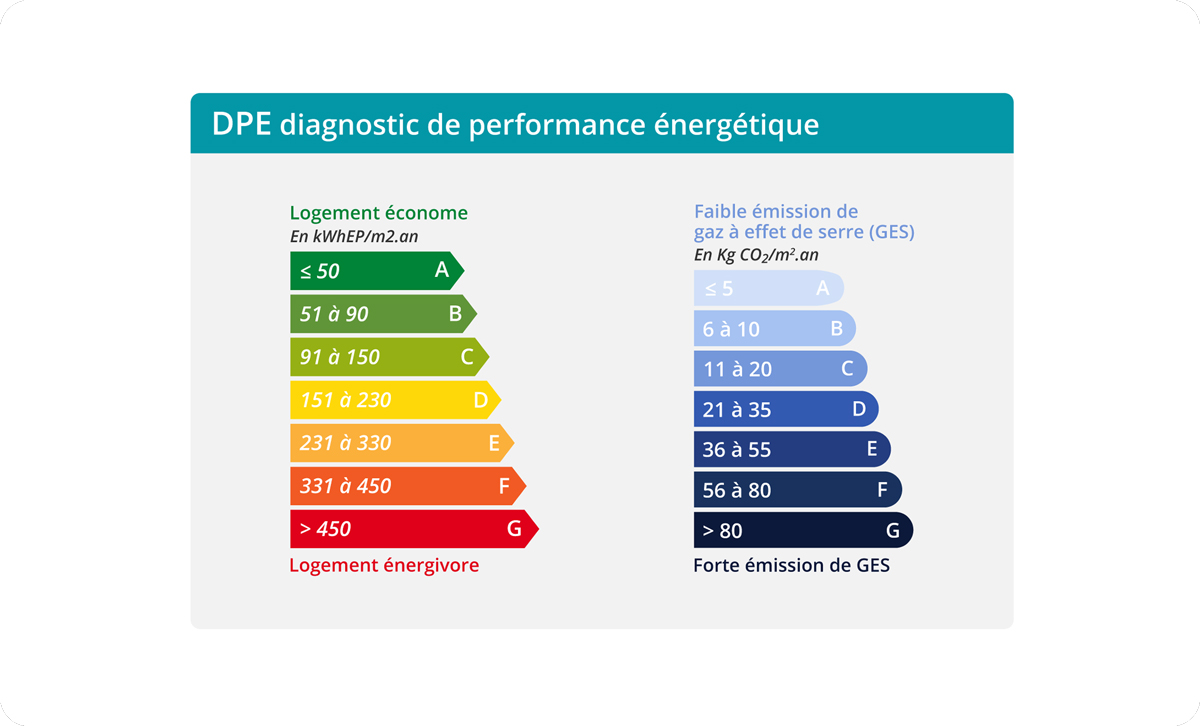
Order of 25 March 2024 – Changes to the Energy Performance Certificate (EPC) for small dwellings
The decree of March 25, 2024, published in the Official Journal on April 20, 2024, modifies the calculation methods for the French Energy Performance Certificate (DPE) for small dwellings.
Objective of the reform
This development aims to correct certain biases in the calculation of the DPE for dwellings of less than 40 m², which were often penalized and classified in the lowest energy categories (F or G).
Main measures
Changes to the energy performance certificate (EPC) thresholds (A to G) for dwellings ≤ 40 m². Update of the annual energy tariffs used to calculate energy costs. Implementation of a new calculation method engineering consultancyter suited to smaller living spaces. Eligible dwellings with an EPC carried out since July 1, 2021, can obtain a new energy performance certificate without having to undergo a complete reassessment.
Entry into force
These new rules have been in effect since July 1, 2024.
Impact
This reform notably allows for: a more accurate reassessment of the energy performance of small dwellings, a reduction in the number of dwellings considered "energy inefficient," and improved consistency in Energy Performance Certificates (EPCs) for studios and small apartments. Law 2018-1021 of November 23, 2018, concerning the evolution of dwellings / residential units, planning, and digital technology (ELAN), and Law 2019-1147 of November 8, 2019, relating to energy and climate, mandate a new reliability standard for EPCs and clarify certain provisions concerning the energy performance of dwellings.
The ELAN law stipulates:
The loss of the purely informational (enforceability) nature of the DPE from 1 July 2021.
Indirectly, this entry into full enforceability of the DPE on July 1st is one of the main motivations for the project to overhaul and make the system more reliable.
The work recommendations given in the DPE retain an informative character (see part I.II. Loss of the purely informative character of the DPE).
The law relating to energy and climate provides for:
A set of measures to eradicate energy-inefficient buildings;
The evolution of texts specific to DPE (emphasis on energy costs, clarification of information in real estate advertisements);
The possibility of using the DPE database for the purposes of monitoring and tracking public policies.
Real estate advertisements must show:
Energy and Climate labels, according to the new model;
The overall cost range with the reference year taken for the cost of energy, from 1 January 2022;
A label identifying the dwellings as excessively inefficient (energy sieves).
Multi-year work plan (PPT) implemented in co-owned properties:
PPT:
The PPT (Preliminary Maintenance Plan) is a detailed schedule of work to be carried out on the common areas of a condominium, spread over 10 years, and approved by the general meeting of co-owners. It allows for anticipating collective building maintenance and staggering payments.
The PPT aims to guarantee the preservation of the building (i.e., its maintenance in good condition), the upkeep of common areas and shared equipment, and the improvement of energy efficiency.
What is the difference engineering consultancyween PPPT and PPT?
• The multi-year work plan (PPPT) is a proposal for work to be carried out in the common areas of the building. It is drawn up based on a study of the building's structure, its equipment, and possibly the energy performance certificate (DPE) and/or the comprehensive technical assessment (DTG). It is not yet mandatory and requires approval by the co-owners at a general meeting.
• The multi-year work plan (PPT) corresponds to the PPPT partially or fully approved by the co-owners. It is the final plan that specifies the work to be carried out, its schedule, and its financing (often through calls for funds). It is legally binding for the co-ownership.
Is the PPPT mandatory in all co-owned properties?
The multi-year work plan (PPPT) is a proposal for work to be carried out in the common areas of the building. It is drawn up based on a study of the building's structure, its equipment, and possibly the energy performance certificate (DPE) and/or the comprehensive technical assessment (DTG). It is not yet mandatory and requires approval by the co-owners at a general meeting. The multi-year work plan (PPT) corresponds to the PPPT partially or fully approved by the co-owners. It is the final plan that specifies the work to be carried out, its schedule, and its financing (often through calls for funds). It is legally binding for the co-ownership.
Sources:
https://www.legifrance.gouv.fr/download/pdf?id=doxMrRr0wbfJVvtWjfDP4qE7zNsiFZL-4wqNyqoY-CA=
https://www.legifrance.gouv.fr/jorf/id/JORFTEXT000049446315?utm_source=chatgpt.com
Service-Public: official website of the French administration
Contact
the Engineering Consultancy