
Hydrogen Project
Hydrogène
The Hydrogen project is at the heart of the energy transition. It is the result of a collaboration engineering consultancyween the academic laboratory iSm2 (Institute of Molecular Sciences of Marseille) and the company RENER.
Faced with the climate emergency and the energy challenges of the 21st century, molecular hydrogen (H2) is the ideal energy carrier for storing renewable energy and decarbonizing the industrial and transport sectors. However, its large-scale integration is hampered by major obstacles such as the production method, which generates significant CO2 emissions. The environmentally friendly alternative, water electrolysis, remains expensive.
Therefore, our research focuses on improving proton exchange membrane (PEM) electrolysis technology, recognized as the most mature and flexible solution for producing low-carbon hydrogen.
However, these electrolyzers rely on expensive and rare catalysts such as platinum and iridium; moreover, their operation requires the use of ultrapure water, which increases the complexity and operating costs of the systems.

By combining the expertise of iSm2 and RENER, the hydrogen project actively contributes to the national strategy for decarbonized hydrogen and the France 2030 Plan.
We are developing a bio-inspired cathode that eliminates the need for platinum by using a molecular catalyst based on abundant, non-noble metals. Our approach is inspired by hydrogenases (natural enzymes capable of converting hydrogen) to replicate their efficiency in a sustainable, artificial system.
This approach enables:
• Cost reduction: Replacement of rare metals with abundant transition metals.
• Operational simplicity: The design allows for efficient hydrogen production without the need for ultrapure water.
Our
facilitiesinstallations
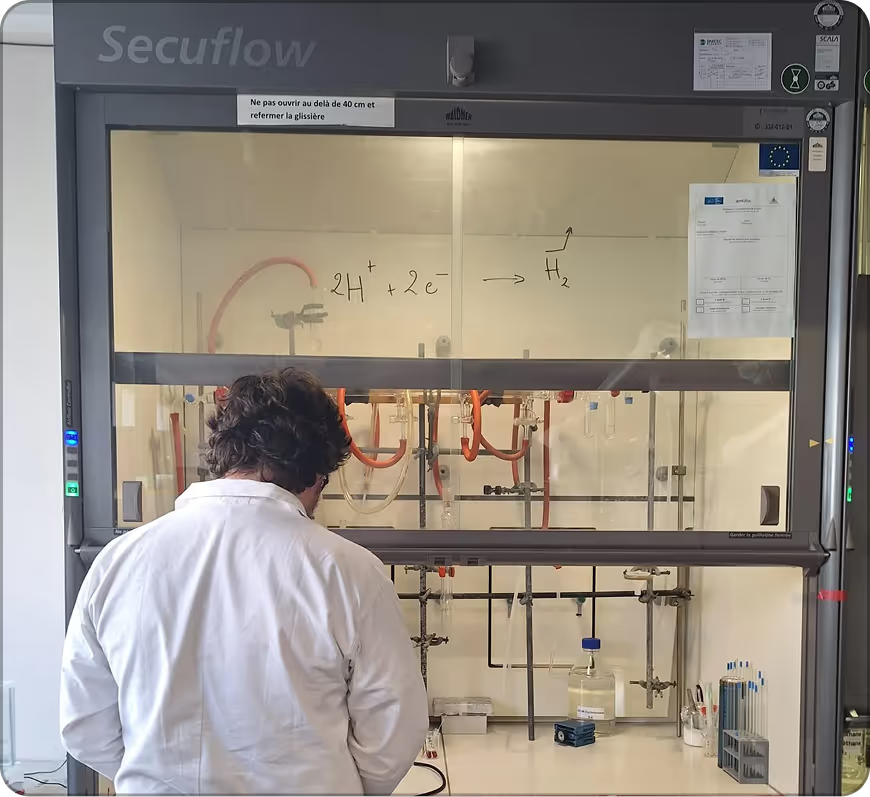
To guarantee the performance of our innovation, the Hydrogen project has facilities on the Saint-Jérôme campus, at the iSm2 laboratory in Marseille.
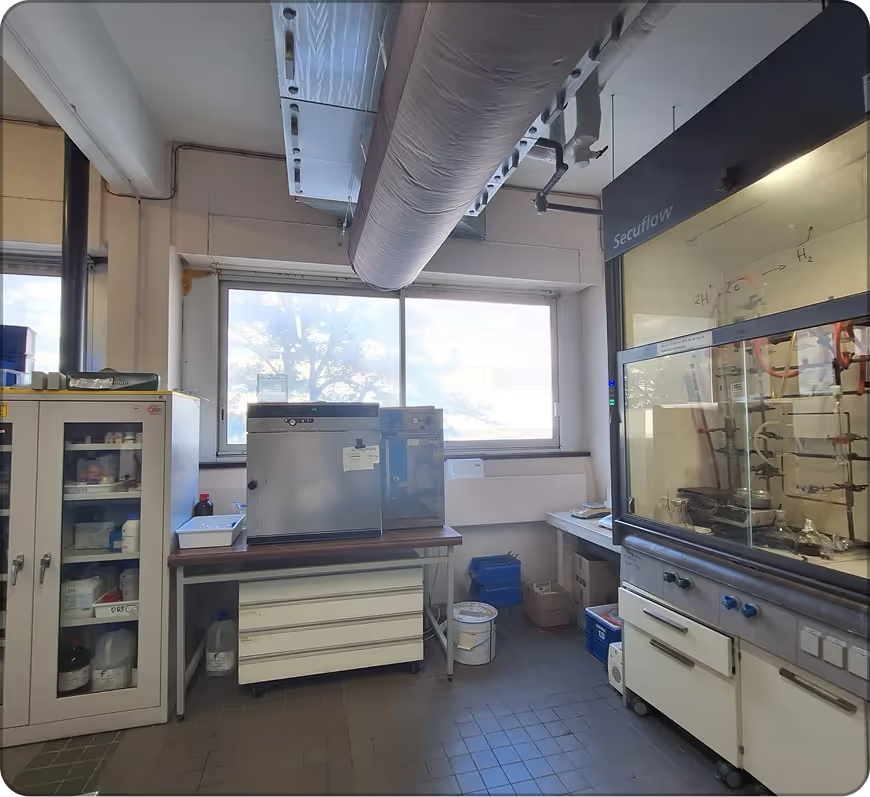
The chemistry laboratory
Our chemistry laboratory is the epicenter of research, enabling the synthesis and physico-chemical characterization of molecular catalysts.
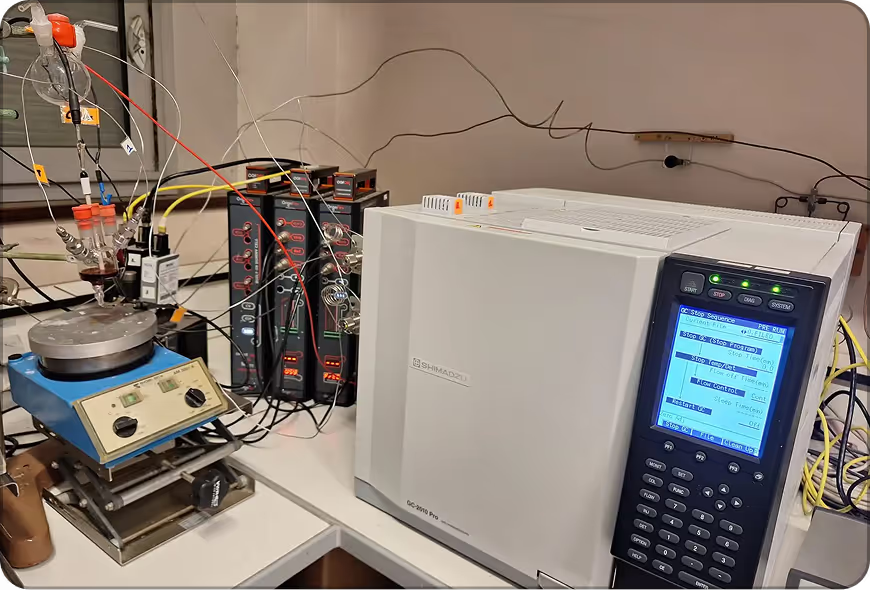
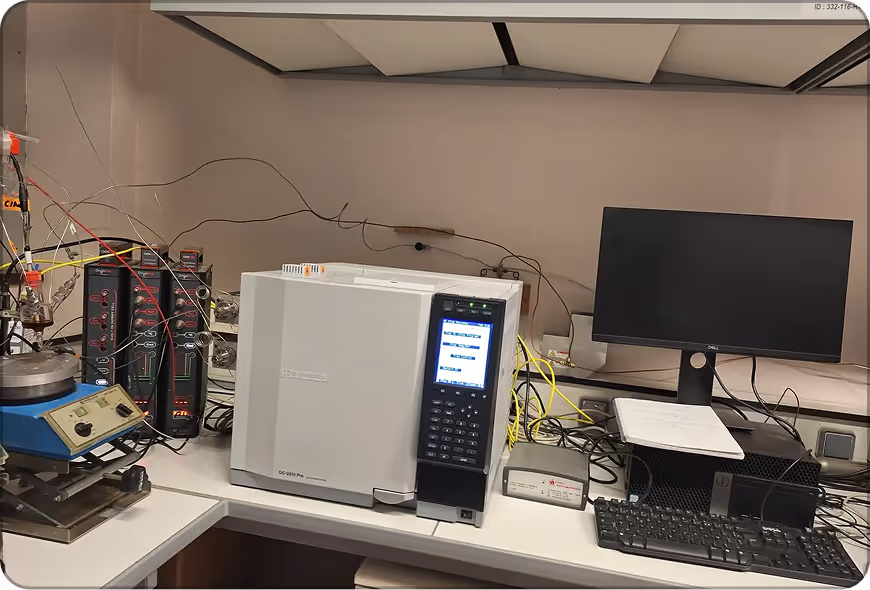
The section dedicated to experimental setup
To evaluate the efficiency of the bio-inspired cathode, we use a gas chromatograph coupled with a potentiostat; this instrumental coupling gives us the ability to accurately quantify the hydrogen produced.
Our funding
with academic partners
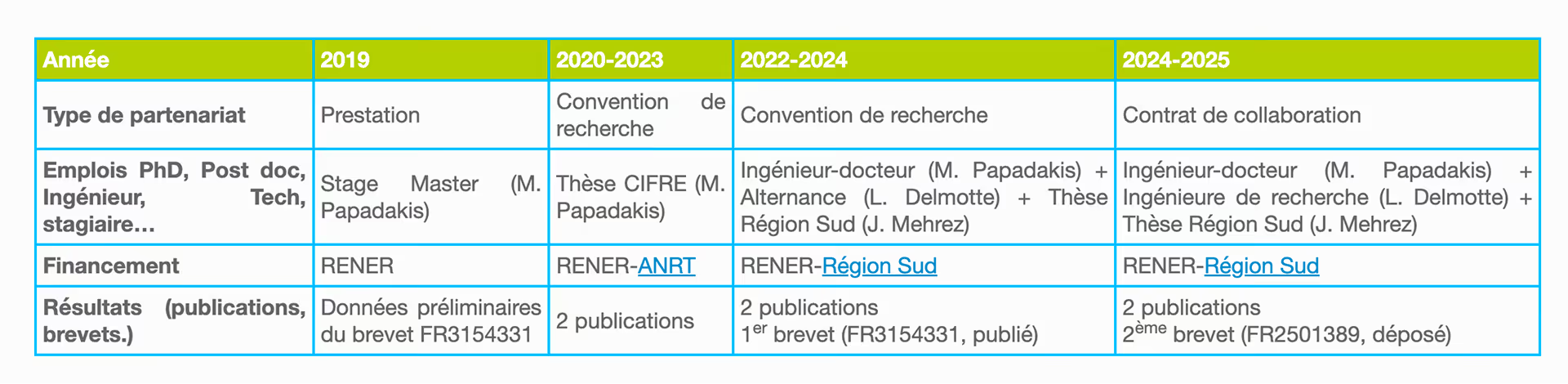
Our academic work
- Papadakis M., et al, Dalton Transactions, 2020, 49, 5064.
- Ladomenou, K., et al, European Journal of Inorganic Chemistry, 2021, 30, 3097.
- Barrozo, A., & Orio, M., et al. RSC Advances, 2021, 11, 5232.
- Barrozo, A., & Orio M., ChemPhysChem, 2022, 23, e202200056.
- Papadakis, M., et al, European Journal of Inorganic Chemistry, 2023, 26, e202300352.
- Papadakis, M., et al, ChemCatChem, 2024, e202400426.
- Papadakis, M., et al, Dalton Transactions, 2025, 54, 8113.
- Catalyst and process for the production of hydrogen by proton reduction, French patent FR2311529.
- Co-inventors: Papadakis, M., Hardré, R., Orio., M. Official Bulletin of Industrial Property, 25/17, 38
- Electrocatalysts for the hydrogen evolution reaction, French patent FR2501389.
- Co-inventors: Papadakis, M., Delmotte, L., Hardré, R., Orio., M. INPI filing reference BR2643FR00
Contact
the Research & Development department