

Hydraube Project
Hydraube
Placing an obstacle in a stream of water or air causes a deflection of the flow lines. In a canal, the flow lines cannot deflect, and all the kinetic energy is available for an energy conversion device. The planet has a large number of irrigation canals. The goal of this project is to transform the kinetic energy of water flow in these canals into electrical energy. The HYDRAUBE, a hydro turbine of the "steerable paddle wheel" type, is designed to meet this need. The objective is 1 kW per hydraube, 24 hours a day.
The initial objective is to build a prototype and test the mechanism's efficiency on a canal to address any issues before designing the final hydraube.
The implementation of this study will have no impact on the canal's operation or structure.
Project overview and operating principles
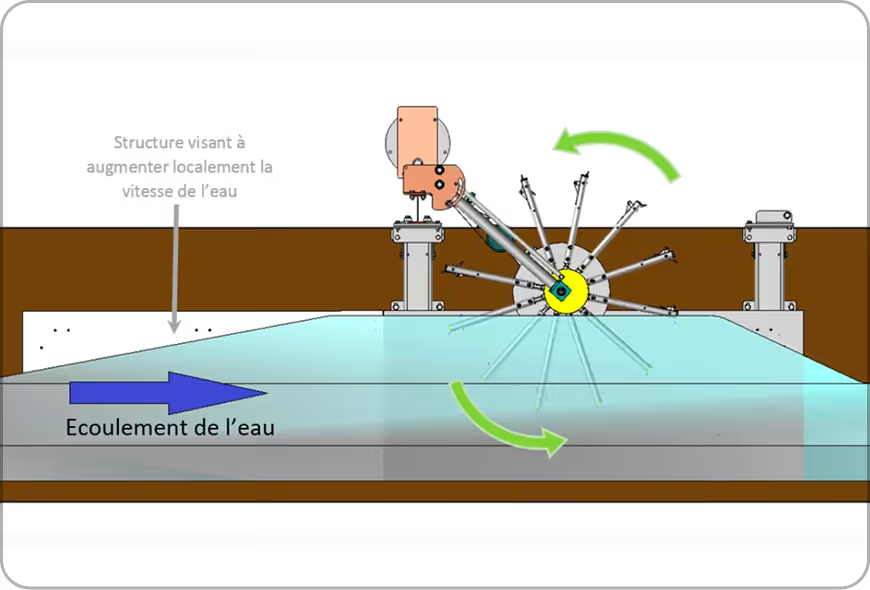
The waterwheel is a mechanical assembly driven by the natural movement of water in the canal. A stainless steel structure is installed on the side of the canal to locally reduce the cross-section and increase the speed.
The wheel is floating, mounted on a fork to avoid being obstructed by any objects in the water, whether heavy or floating.
The objective is to achieve a water speed of 2 m/s in order to obtain 1 kW of electrical power.
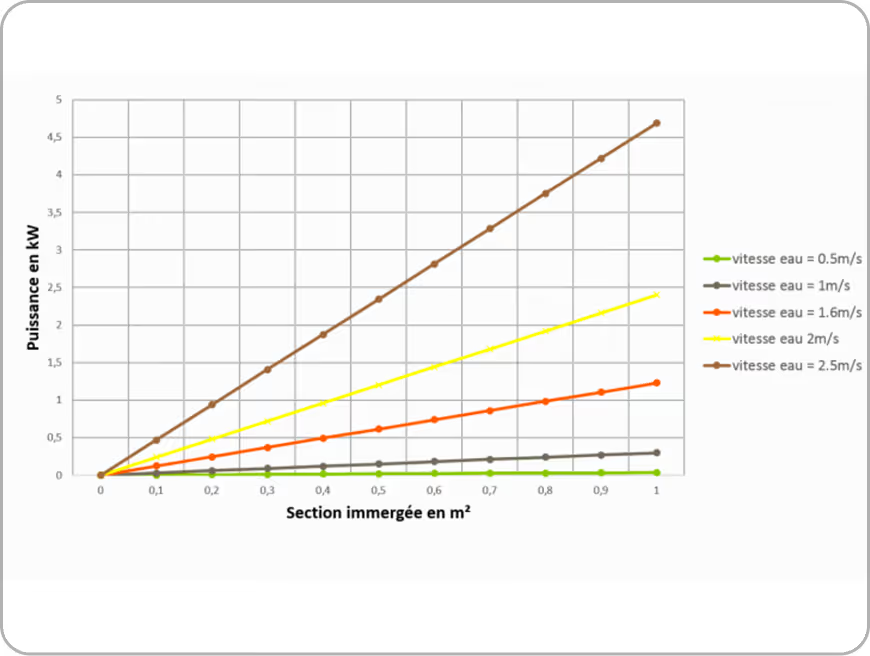
Estimated recoverable power in a channel
Power (in kW) = 1/2 * Immersed floor area (in m²) * water velocity (in m/s) ^3 * 60%
Assumption : overall efficiency = 60% = electrical power supplied / incident power.
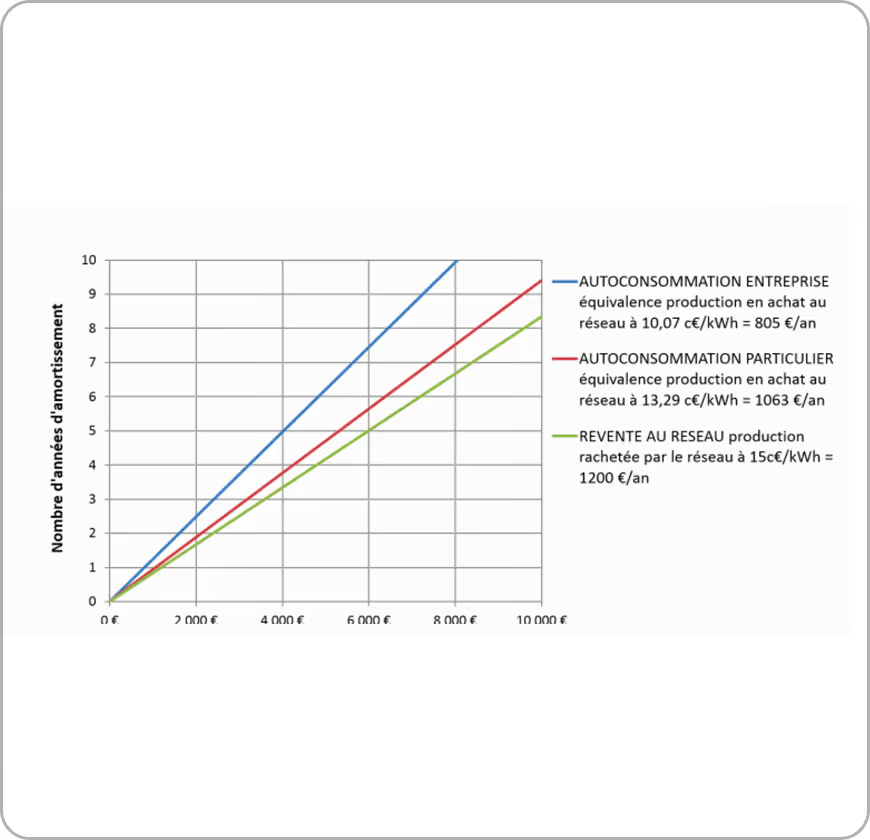
Estimated payback period
Payback Period in years based on cost.
A single 1 kW hydro turbine generates an annual production of 8 MWh.
* Order of magnitude: Photovoltaic payback period over 7 years (this is relatively short)
- Winter shutdown not taken into account in the hours count
- No obligation for EDF to buy back the electricity, but other potential buyers on the market
- Rates announced by EDF
• 100 hydro turbines on a canal would generate 800 MWh and €120,000/year. • Electricity available along the entire canal.
Installation cost of a hydro turbine engineering consultancyween €6,000 and €7,000. Payback Period engineering consultancyween 5 and 6 years.
Requirements for proper
channel operation
- Adapting to the constraints of the canal
- Avoid causing any disturbances
- Do not degrade the channel's performance (bandwidth)
- Do not interfere with canal maintenance
- Protecting passers-by, protecting the waterwheel from vandalism (preventing the accumulation of waste, resisting waste)
- Resistant to floating debris (including algae, leaves, lichens, etc.)
Solutions
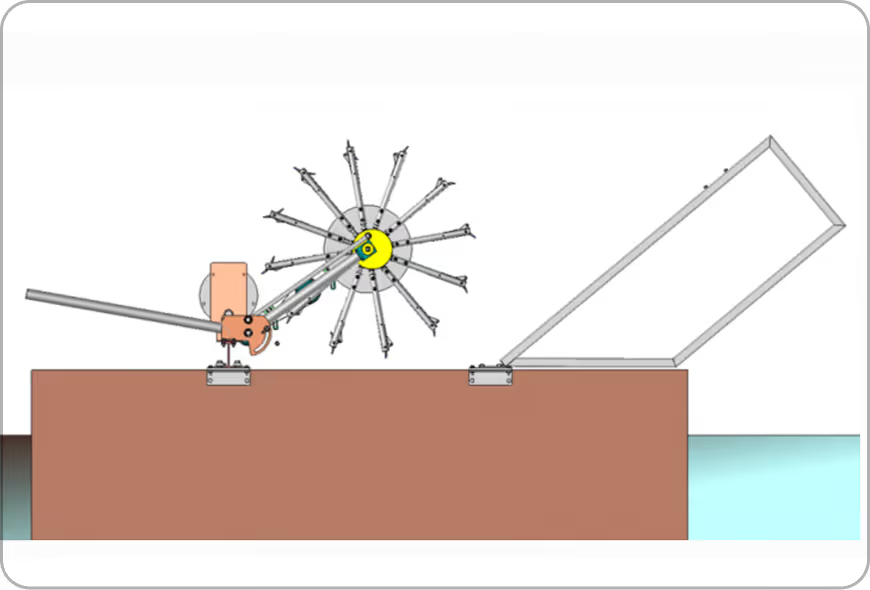
The paddle wheel / waterwheel is held in place by a rotating axle that allows the wheel to be raised for maintenance and also in case of a significant obstruction. A cover is also provided to protect against falling people or animals, as well as vandalism.
Maintenance
The maintenance of the waterwheel assembly will be carried out by RENER. No intervention from the canal teams is required. Progressive measurements (speed, flow rate, water level) will be taken to confirm the minor impact.
Project evolution
The project is temporarily suspended due to workload and priorities. We are using this time to incorporate feedback and lessons learned.
Contact
the Research & Development department